Gecko Feet: Nature's Super Glue
The Science
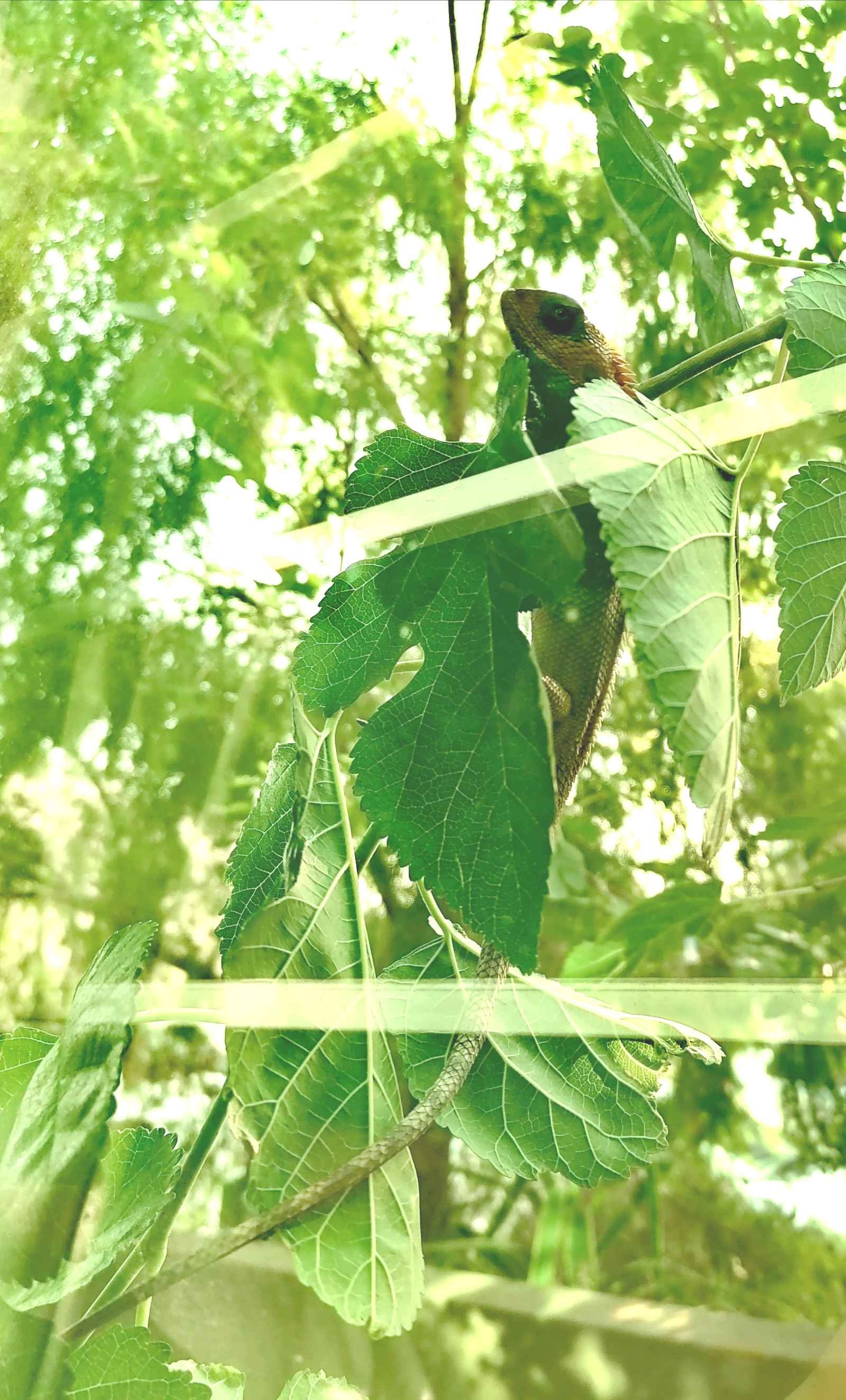
A gecko has 4-5 toes. On each toe are hair-like strands, setae. The end of every seta breaks down into hundreds of more parts, called spatulae. These spatulae can get really flat on a surface, creating the Van der Waals force (a short-time, adhesion that occurs when molecules come really close together). This tiny adhesive force produced by each spatulae adds up to create the force geckos use to climb slippery surfaces. Today, engineers are using the science behind spatulae and setae to create robots which can climb vertical surfaces and function in zero-gravity.
Why I Chose It
This gecko, the Oriental Garden Lizard, had a brightly colored head making it attractive. Watching such a heavy creature easily climb a thin branch was really interesting.

Support your favourite photograph by voting, liking and leaving a meaningful comment. The entry with the highest verified public engagement receives the People's Choice Award.
| Criteria | Rating | Score |
|---|---|---|
|
Scientific Understanding & AccuracyIs the scientific concept correct and clearly understood?
|
/5 | |
|
Relevance to the ThemeDoes the photo clearly represent science in everyday life?
|
/5 | |
|
Originality & ObservationDoes the entry show thoughtful, unique observation?
|
/5 | |
|
Photo Quality & CompositionClear, focused, well-framed and visually effective?
|
/5 | |
|
Explanation & Overall ImpactSimple, accurate, engaging and connected to the image?
|
/5 | |
| Total Score | /25 |
Judges' Choice Award
Selected by the official judging panel based on scientific accuracy, theme relevance, originality, photo quality, and explanation — using the rubric above.
People's Choice Award
Selected through verified public votes, likes and meaningful comments during the voting period.