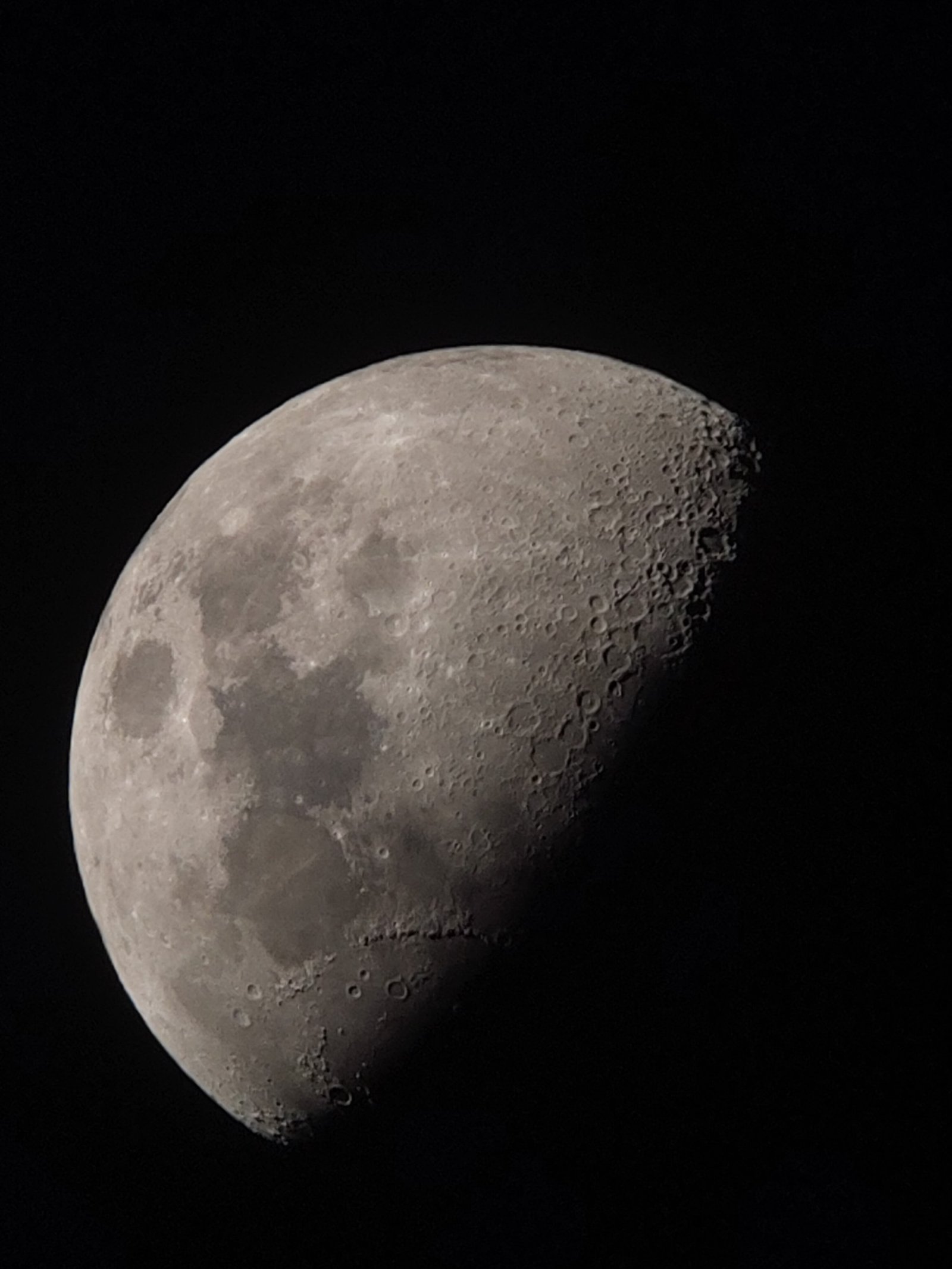
Waning Gibbous Moon's Cratered Surface
The Science
The Moon does not produce its own light; it shines by reflecting sunlight. In this waning gibbous phase, more than half of the Moon’s visible surface is illuminated, but the bright portion is gradually decreasing after the full moon. The dark and bright boundary, called the terminator, makes craters and mountains easier to see because sunlight strikes the surface at a low angle and creates long shadows. These craters were mainly formed by impacts from meteoroids over millions of years.
Why I Chose It
I selected this photo because it clearly shows the Moon’s craters, uneven surface, and the effect of light and shadow. I captured it from Karachi using a Made-in-Pakistan astronomical telescope and a mobile phone. The experience showed me that locally made scientific equipment can also help us observe and photograph distant objects in space with impressive detail.

Support your favourite photograph by voting, liking and leaving a meaningful comment. The entry with the highest verified public engagement receives the People's Choice Award.
| Criteria | Rating | Score |
|---|---|---|
|
Scientific Understanding & AccuracyIs the scientific concept correct and clearly understood?
|
/5 | |
|
Relevance to the ThemeDoes the photo clearly represent science in everyday life?
|
/5 | |
|
Originality & ObservationDoes the entry show thoughtful, unique observation?
|
/5 | |
|
Photo Quality & CompositionClear, focused, well-framed and visually effective?
|
/5 | |
|
Explanation & Overall ImpactSimple, accurate, engaging and connected to the image?
|
/5 | |
| Total Score | /25 |
Judges' Choice Award
Selected by the official judging panel based on scientific accuracy, theme relevance, originality, photo quality, and explanation — using the rubric above.
People's Choice Award
Selected through verified public votes, likes and meaningful comments during the voting period.