relaxation. However, after a few weeks, many of us find ourselves spending hours scrolling
through social media, watching videos, or playing games. We often think boredom is a
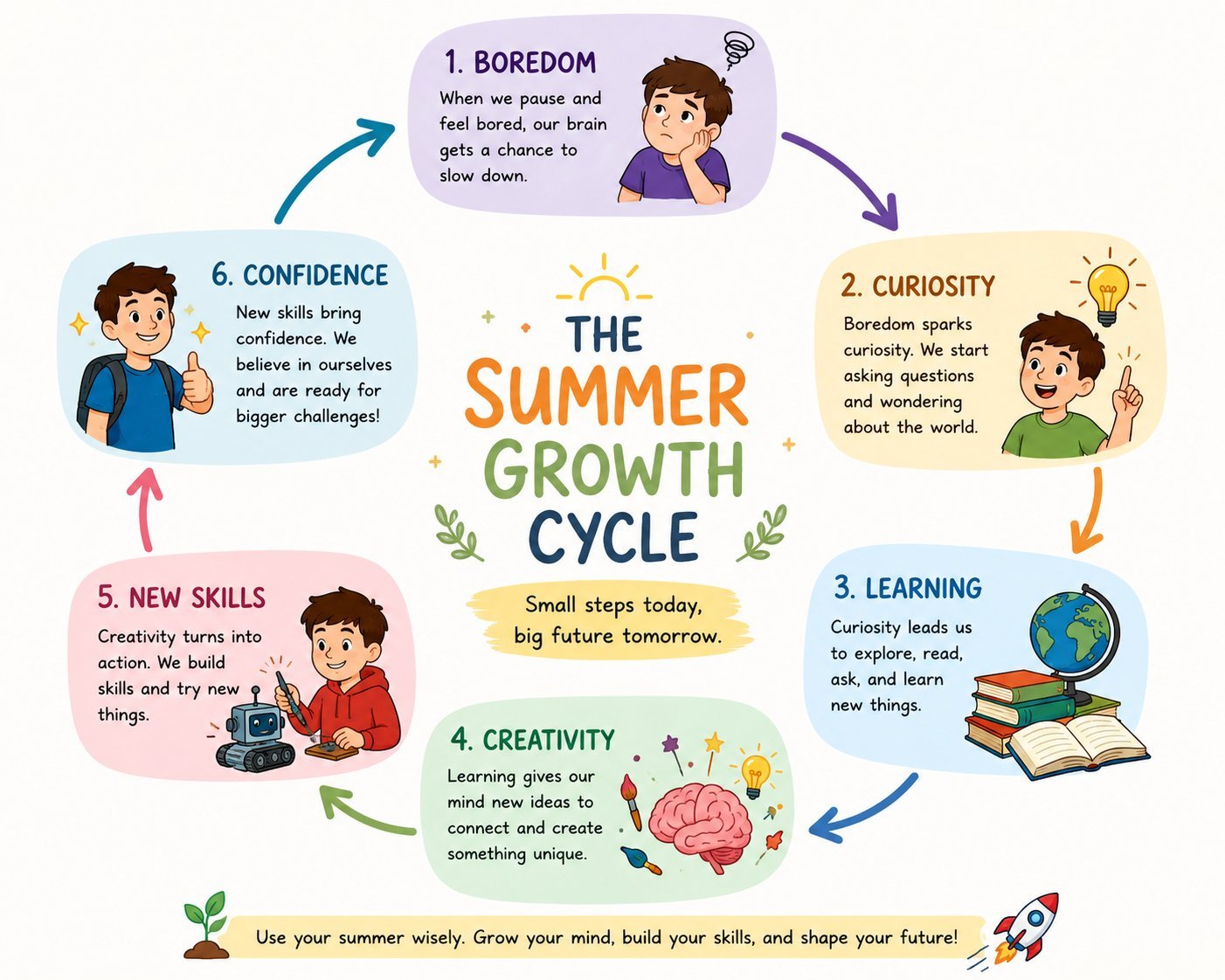
problem, but science suggests something surprising: boredom can actually be good for us.
Our brains are not designed to be entertained every second of the day. When we constantly
use phones, tablets, or computers, our minds become busy receiving information. But when
we are bored, our brains switch into a different mode. Scientists have found that during quiet
moments, the brain starts connecting ideas, solving problems, and generating creative
thoughts.
Think about some of the best ideas people have. Many happen while taking a walk, sitting
quietly, or daydreaming. This is because the brain finally has time to think. In fact, many
inventors, writers, and scientists have talked about getting their best ideas during moments
when they were not doing anything special.
Last summer, I noticed something interesting. Whenever I spent hours on my phone, the day
felt shorter, but I could hardly remember what I had done. On the days when I read a book,
learned a new skill, or simply spent time outdoors, I felt more satisfied and accomplished.
This made me realize that being busy is not the same as being productive.
So how can students use summer more wisely? One simple idea is the "60-30-30 Rule."
Spend 60 minutes learning something new, such as a language, coding, writing, or science.
Spend 30 minutes being physically active through sports, exercise, or a walk. Then spend 30
minutes doing something creative like drawing, photography, journaling, or building a simple
STEM project.
This does not mean technology is bad. Technology helps us learn, connect, and explore new
ideas. The key is balance. Instead of letting screens control our time, we should use them as
tools to achieve our goals.
Summer is not just a break from school. It is an opportunity to discover interests, build skills,
and understand ourselves better. The next time you feel bored, do not rush to grab your phone. That moment of boredom might be the beginning of your next great idea.